Eyelid Demodicosis — Causes, Symptoms, and Modern Treatment Methods

Eyelid Demodicosis — Causes, Symptoms, and Modern Treatment Methods

Eyelid Demodicosis — Causes, Symptoms, and Modern Treatment Methods
Demodicosis is a common yet often overlooked inflammatory disease of the eyes and eyelids, caused by the excessive multiplication of microscopic mites —

Demodex folliculorum

and

Demodex brevis

— which normally live on the human skin. These mites inhabit the hair follicles and meibomian glands, feeding on skin sebum and dead cells. Under normal conditions they do not cause harm, but when their number exceeds the norm, an inflammatory reaction occurs, leading to irritation, itching, and various ocular surface disturbances.
The activation of these mites is related to both internal and external factors.

The main causes include:

Weakened immune system

due to chronic diseases, infections, or prolonged stress.

Increased skin oiliness

, which creates a favorable environment for mite growth.

Hormonal imbalance

, such as thyroid or ovarian dysfunction.

Age-related changes

, as the condition is more common in middle-aged and elderly people.

Poor eyelid hygiene

and overuse of oily cosmetics, especially mascara and eye creams.
When several of these factors act together, Demodex mites begin to reproduce rapidly, causing inflammation of the eyelids and eye surface.

Symptoms

Demodicosis develops gradually. Initially, a person may notice mild itching or tingling around the eyelids, but over time the symptoms become more pronounced.

Typical symptoms include:

• Itching and burning of the eyelids, especially in the morning.
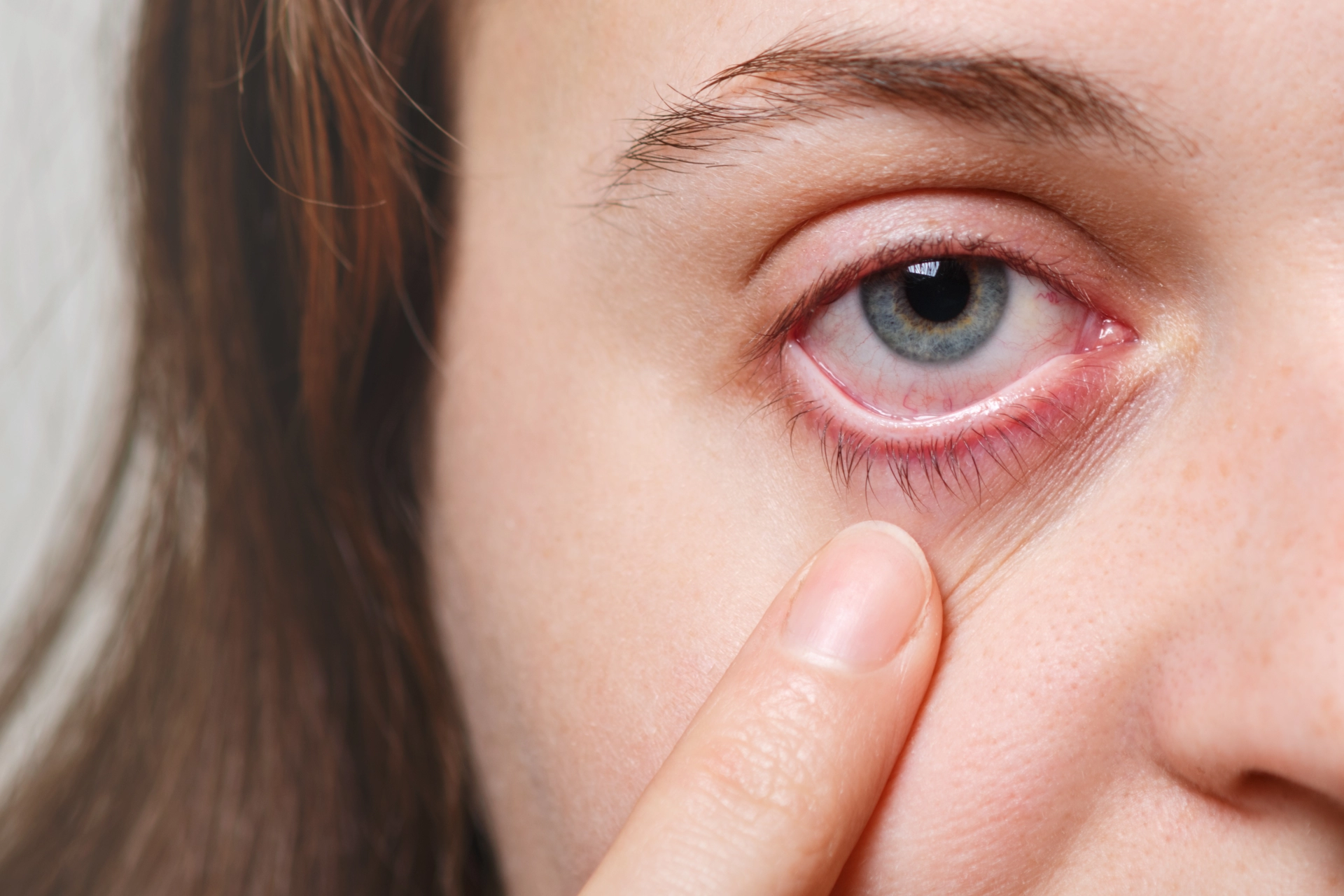
• Redness, swelling, and a feeling of heaviness in the eyelids.
• Yellowish-white crusts or discharge at the base of the eyelashes.
• Tearing, a gritty or foreign body sensation.
• Recurrent inflammation along the eyelid margins, sometimes involving the cornea and conjunctiva.
If the mites affect the meibomian glands, meibomian gland dysfunction may develop, causing chronic eye dryness, irritation, and light sensitivity.

Diagnosis

Diagnosis is confirmed by an ophthalmologist through microscopic examination of eyelashes to identify mites and their eggs. Additionally, the condition of the cornea and tear film is evaluated to determine the severity of inflammation and to detect possible complications.

Modern Treatment Approaches

Treatment of demodicosis is lengthy and requires a complex, combined approach aimed at reducing mite activity, eliminating inflammation, and restoring normal eyelid function.
The main treatment directions are:
1.

Eyelid and eyelash hygiene

— daily cleansing with special lotions or wipes to remove secretions and mite waste; warm compresses to improve meibomian gland function.
2.

Topical therapy

— ointments and drops containing anti-mite components such as tea tree oil, metronidazole, or ivermectin; anti-inflammatory agents to reduce redness and swelling.
3.

Systemic therapy

— oral medications in severe cases, prescribed only under medical supervision.
4.

Supportive therapy

— artificial tears to relieve dryness, as well as lifestyle adjustments including healthy diet, adequate sleep, and stress management.

Prevention

To prevent recurrence, it is essential to maintain regular eyelid hygiene, limit the use of oily cosmetics, and avoid using old or contaminated makeup products. Any early signs such as itching, redness, or tearing should prompt a visit to an ophthalmologist to avoid complications.

Conclusion
Demodicosis does not threaten vision directly, but it can significantly affect quality of life by causing chronic discomfort, irritation, and cosmetic concerns. Early diagnosis, proper hygiene, and comprehensive treatment allow effective control of the disease and help prevent relapses.
What is a C-Peptide test?
22 December 2025
A C-peptide test measures the level of C-peptide in your blood or urine to evaluate how much insulin your pancreas is producing. Because C-peptide and insulin are released into the bloodstream at the same time and in equal amounts, this test provides a reliable picture of your body’s natural insulin production. Unlike insulin levels, C-peptide is not affected by injected or inhaled insulin used for diabetes treatment. For this reason, healthcare providers often rely on a C-peptide test to distinguish between insulin made by the body and insulin taken as medication. Understanding C-Peptide and Insulin C-peptide is a short chain of amino acids created when the pancreas produces insulin. Insulin is the hormone responsible for helping glucose enter the body’s cells, where it is used for energy. Proper insulin function is essential for maintaining healthy blood sugar levels. In people with Type 1 diabetes, the pancreas produces little or no insulin. In Type 2 diabetes, insulin is produced, but the body may not use it effectively, or insulin production may decline over time. Measuring C-peptide helps clarify which situation is present. Why Is a C-Peptide Test Performed? Healthcare providers may order a C-peptide test to better understand blood sugar disorders and guide treatment decisions. Common reasons include: • Determining whether diabetes is Type 1 or Type 2 when the diagnosis is unclear • Evaluating how well current diabetes treatment is working • Deciding whether insulin therapy is necessary • Investigating unexplained low blood sugar (hypoglycemia) • Differentiating between insulin produced by the body and insulin taken as medication • Monitoring or diagnosing rare insulin-producing pancreatic tumors (insulinomas) How Is the Test Done? A C-peptide test is usually performed using a blood sample taken from a vein in the arm. In some cases, especially when more detailed information is needed, the test may be done using urine collected over a 24-hour period. Blood testing is more common and quicker. Depending on the clinical situation, your provider may ask you to fast for 8–12 hours or may measure C-peptide after eating to see how your pancreas responds to food. The test is often performed alongside a blood glucose measurement. Understanding the Results C-peptide results must always be interpreted together with blood sugar levels and clinical findings. In general: • Low C-peptide levels suggest reduced insulin production, which may occur in Type 1 diabetes, advanced Type 2 diabetes, after insulin injections, or with certain conditions such as Addison disease or severe liver disease. • High C-peptide levels indicate excessive insulin production, which may be associated with insulin resistance, Type 2 diabetes, Cushing syndrome, kidney disease, low potassium levels, or insulin-producing tumors. • If no C-peptide is detected, insulin replacement therapy is usually required. Important Notes A C-peptide test does not diagnose diabetes on its own. Blood glucose tests and hemoglobin A1c (HbA1c) remain the primary tools for diagnosing diabetes. Instead, the C-peptide test plays a supportive role by showing how well the pancreas is functioning and helping tailor long-term treatment strategies.
What is an occlusal guard?
17 December 2025
An occlusal guard is a removable dental appliance designed to protect the teeth and jaw from the harmful effects of teeth grinding and jaw clenching (bruxism). These habits usually occur during sleep and often go unnoticed, yet they can lead to serious dental and muscular problems over time. Many patients only discover they have bruxism after experiencing tooth sensitivity, jaw pain, headaches, or visible damage to their teeth. The occlusal guard is worn over the teeth—most commonly at night—and creates a protective barrier between the upper and lower jaws. Instead of teeth grinding directly against each other, biting forces are absorbed and evenly distributed by the guard. This reduces stress on the teeth, jaw joints, and facial muscles, helping prevent further damage and improve comfort upon waking. Occlusal guards are typically custom-made by a dentist using precise impressions or digital scans of the teeth. They are produced from durable dental materials such as acrylic or flexible plastic. Depending on the severity of bruxism, a dentist may recommend a soft, hard, or hybrid occlusal guard. Why Is an Occlusal Guard Needed? An occlusal guard helps protect oral health by: • Preventing enamel wear, cracks, and tooth fractures • Reducing jaw pain, muscle tension, and morning headaches • Minimizing tooth mobility, gum recession, and bone loss • Improving sleep quality and morning comfort How Does an Occlusal Guard Work? During sleep, an occlusal guard: • Prevents direct tooth-to-tooth contact • Absorbs and redistributes clenching pressure • Allows teeth to glide smoothly instead of grinding • Protects the jaw joints and surrounding muscles With consistent use and proper care, an occlusal guard is an effective, non-invasive solution for managing bruxism, preserving dental health, and maintaining long-term comfort.If you are experiencing symptoms of bruxism, visit Dalimed Medical Center for a professional consultation and a custom-fitted occlusal guard. Our specialists will help you preserve your dental health and ensure long-term comfort with a solution tailored specifically for you.
What is an AMH test?
15 December 2025
An AMH test measures the level of anti-müllerian hormone in your blood. This hormone is produced by the small follicles in your ovaries and reflects the number of eggs you have — your ovarian reserve. Higher AMH levels usually suggest more available eggs, while lower levels indicate fewer remaining eggs or a naturally declining reserve with age. Although AMH provides valuable insight into egg quantity, it cannot predict how easily you can get pregnant, whether fertility treatment will work or when menopause will begin. Healthcare providers use AMH testing to get a clearer picture of reproductive health. It helps determine if your ovaries are aging faster than expected, estimate how well you may respond to fertility medications and prepare for treatments such as IVF, where multiple mature eggs are needed. AMH can also be useful in identifying or tracking certain ovarian tumors, including granulosa cell tumors. AMH levels rise through adolescence, peak in your mid-20s and gradually decrease as you age. Typical levels range from 1.0 to 3.0 ng/mL, while anything below 1.0 is considered low. Levels may vary slightly depending on the laboratory equipment used. What an AMH test is used for: • Evaluating ovarian reserve, reproductive aging and potential response to fertility treatments like IVF. • Helping diagnose or monitor ovarian masses, especially granulosa cell tumors. The AMH test is a simple blood test that can be performed at any point in the menstrual cycle because AMH stays relatively stable throughout the month. You don’t need to prepare beforehand. If your sample is processed by a laboratory, results typically return within a few days. While at-home AMH kits are available, a specialist should always interpret the results. Fertility is influenced by many factors, including age, ovulation patterns, sperm quality, blocked fallopian tubes, pelvic conditions and uterine abnormalities — none of which AMH can measure. What an AMH test cannot tell you: • Your ability to conceive naturally, your exact fertility potential or the age you will reach menopause. • Other major fertility factors such as sperm count, ovulatory problems, fallopian tube blockage, endometriosis or uterine fibroids. In summary, an AMH test offers valuable information about your ovarian reserve, but it is only one part of the bigger fertility picture. Understanding your results with a qualified specialist ensures you get accurate guidance and a personalized plan for pregnancy or treatment options.
What Is Bradycardia?
11 December 2025
Bradycardia means your heart beats slower than normal — fewer than 60 beats per minute. For many people, especially athletes or those who are asleep, this can be completely normal. But sometimes a low heart rate signals a problem with the heart’s electrical system and may prevent the body from getting enough oxygen-rich blood. Many people with bradycardia feel no symptoms at all. Others may experience dizziness, fainting, unusual fatigue, shortness of breath or trouble concentrating. These symptoms appear when the heart isn’t pumping enough blood to meet the body’s needs. Even if you feel well, it’s important to talk to a healthcare provider if you notice that your heart rate is consistently lower than usual. Common causes include: • Age-related changes in the heart’s electrical pathways, electrolyte imbalances, underactive thyroid, sleep apnea and infections such as Lyme disease. • Heart conditions like cardiomyopathy or previous heart attacks, as well as certain medications including beta-blockers and calcium channel blockers. To diagnose bradycardia, doctors typically start with an electrocardiogram (ECG), though additional monitoring may be needed because slow heart rate episodes can come and go. Blood tests, echocardiograms, stress tests and sleep studies help identify underlying problems. Treatment depends on the cause. Sometimes adjusting medications or treating thyroid issues, infections or other conditions is enough to correct the heart rate. In more serious cases where the heart’s electrical system isn’t functioning properly, a pacemaker may be needed. If a person is healthy and has no symptoms — as is often the case with athletes — treatment might not be necessary. Seek emergency care if: • You have a low heart rate with chest pain, severe dizziness, difficulty breathing or fainting. • Your heart rate drops below 40 beats per minute and this isn’t normal for you. Bradycardia is often treatable and sometimes temporary. With early diagnosis and proper care, most people have a good outlook.

Fill in the required fields

I am waiting for a call

We will help you quickly find what you need!

Thank you!
Our employee will contact you soon
Close
dalimed medical
How can we help?
Leave your number and we will call you back
Book a call
I agree with the terms of personal data processing
Thank you!
Our employee will contact you soon
Close